
Faith Formation

Marriage Annulments
If either party has been married before, whether in the Catholic Church or through another civil or religious authority, the Church will need to review the previous marriage before a new marriage can take place in the Catholic Church. This applies to both Catholic and non-Catholic parties.
Depending on the circumstances of the previous marriage, an annulment or another type of Church process may be necessary. An annulment is a declaration by the Catholic Church that, after careful examination, a valid sacramental marriage was not established at the time the marriage took place.
You may need to begin the annulment process if:
-
You are a divorced Catholic who wishes to marry in the Catholic Church.
-
You are a divorced Catholic who has already married outside the Catholic Church.
-
You are a divorced non-Catholic who would like to marry a Catholic.
-
You are a divorced non-Catholic who is currently married to a Catholic outside the Catholic Church.
Every situation is different, and having a previous marriage does not mean you should assume what the outcome will be. We encourage you to contact us so we can help you understand the process and determine the appropriate next steps.
For more information or assistance with the annulment process, please contact the Parish Office at 928-855-2685 and ask for Martha, or dial ext. 3.
How do I become Catholic and what is the OCIA?
If you have been thinking about the Catholic Faith but have been waiting for someone to invite you to take the first step, here is your invitation.
If you wish to celebrate Baptism in the Catholic Church, we invite you to participate in the OCIA (Order of Christian Initiation of Adults). This is the Catholic Church’s official process for those seeking Baptism. All those taking this journey meet with a parish team on Tuesdays from 6:00-7:00pm in Holy Family Parish Center, from September through Easter. The formal process consists of a period of Inquiry, a Catechetical period during which one learns specifically about the Catholic Church and a period of Spiritual Formation during Lent. The Celebration of the Sacraments of Initiation takes place at the Easter Vigil. And then, of course, the journey of discipleship continues throughout one’s lifetime.
Perhaps you are already baptized in another faith tradition, but wish to enter full communion with the Catholic Church. We invite you to join us in the OCIA journey, so that you can learn about the rich teachings and traditions of Catholicism.
If you have been baptized Catholic but have not received the Sacraments of Eucharist and/or Confirmation, this process would deepen your understanding as an adult and is highly recommended.
Order of Christian Initiation of Adults - OCIA
OCIA, which stands for Order of Christian Initiation of Adults, is a process through which non-baptized men and women enter into the Catholic Church. It includes several stages marked by study, prayer and rites at Mass.
Participants in OCIA are known as catechumens. They undergo a process of conversion as they study the Gospel, profess their faith in Jesus and the Catholic Church, and receive the sacraments of baptism, confirmation and Holy Eucharist. The OCIA process follows the ancient practice of the Church and was restored by the Second Vatican Council as the normal way adults prepare for baptism.
What is meant when people refer to men and women coming into “full communion with the Church?”
Coming into full communion with the Catholic Church describes the process for entrance into the Catholic Church for men and women who are baptized. These individuals make a profession of faith but they are not baptized again.
To prepare for this reception the people, who are called “candidates,” participate in a formation program to help them understand and experience the specific teachings and practices of the Catholic Church.
OCIA meets yearly from September through Easter.
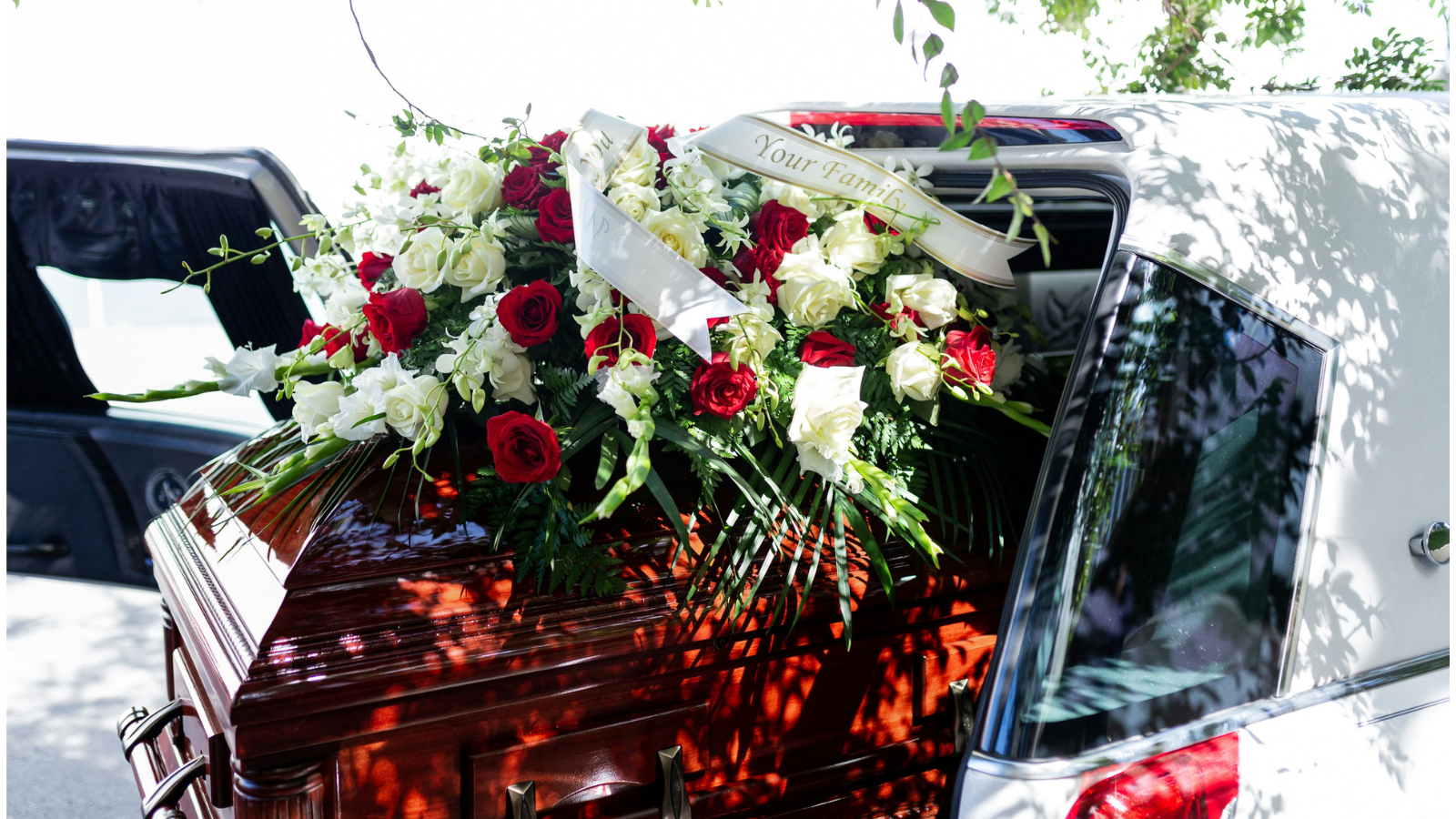
Please call the parish office to notify us that someone has died and you are requesting a funeral. Our coordinator of funerals will call you back as soon as possible.
When making arrangements after a loved one has passed, the best place to begin is to choose and contact a mortuary or funeral home of your choice. They will help to assist making sure all necessary arrangements are coordinated properly between themselves, the Church and the Cemetery.
[module-153]
Mass Schedule
Worship Schedule | Horario de Adoracion
Holy Mass | Misa
Saturday Vigil - 4:00 PM
Sunday - 7:30 AM, 9:30 AM (Livestreamed), 12:00 PM (Espanol),
Daily Mass - Mon - Sat: 8:30 AM
Confession | Confesiones
Tuesday - 5:00 - 5:30 PM
Wednesday - 9:00 - 9:30 AM
Saturday - 9:00 - 9:30 AM
First Friday - 5:00 - 6:00 PM
Other times by appointment
Adoration | Adoracion
Tuesday - 9:00 - 10:00 AM (Tuesdays with Mary)
Friday - 3:00 - 4:00 PM (Holy Hour)
First Friday - 9:00 AM - 3:00 PM (All Day Eucharistic Adoration)
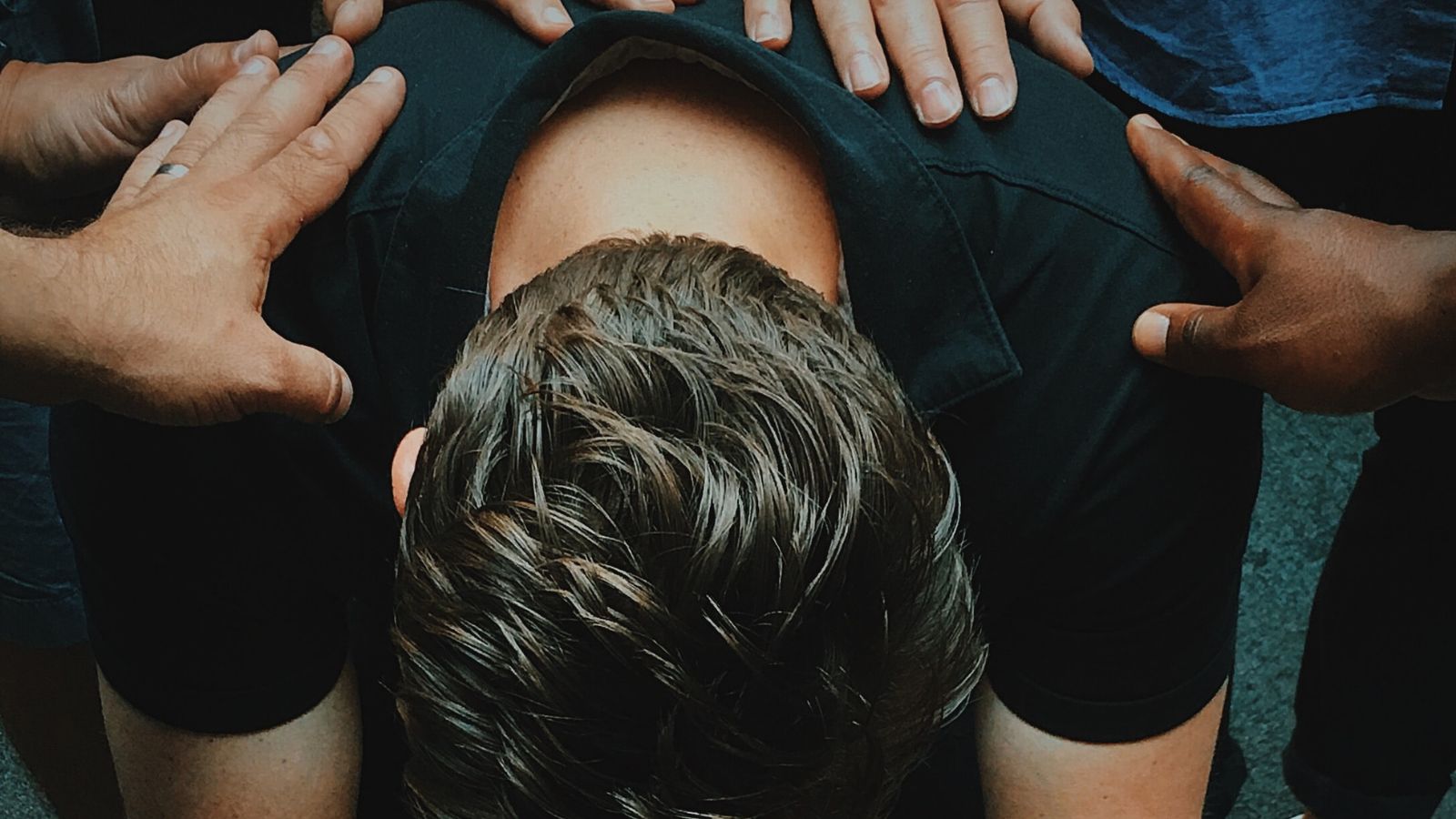
Prayer is communion with God. Prayer can be public or personal, spoken or silent. The psalms are prayers we sing; they have been a part of the Church’s communal prayer since the earliest days of the Church. Prayer is communication with a God who loves us and desires to be in a relationship with us.
Jesus teaches us about the importance of prayer. The Gospels record seventeen times that Jesus took time apart to pray. In the Scriptures, Jesus prays often, morning and night. He prays during critical events in his life and he prays before ministering to people in need. Jesus is a model of prayer for us.
Prayer is essential to living a full, Catholic life. The central communal form of prayer for the Church is the Mass.
For common prayers and devotions, please click on the link below.
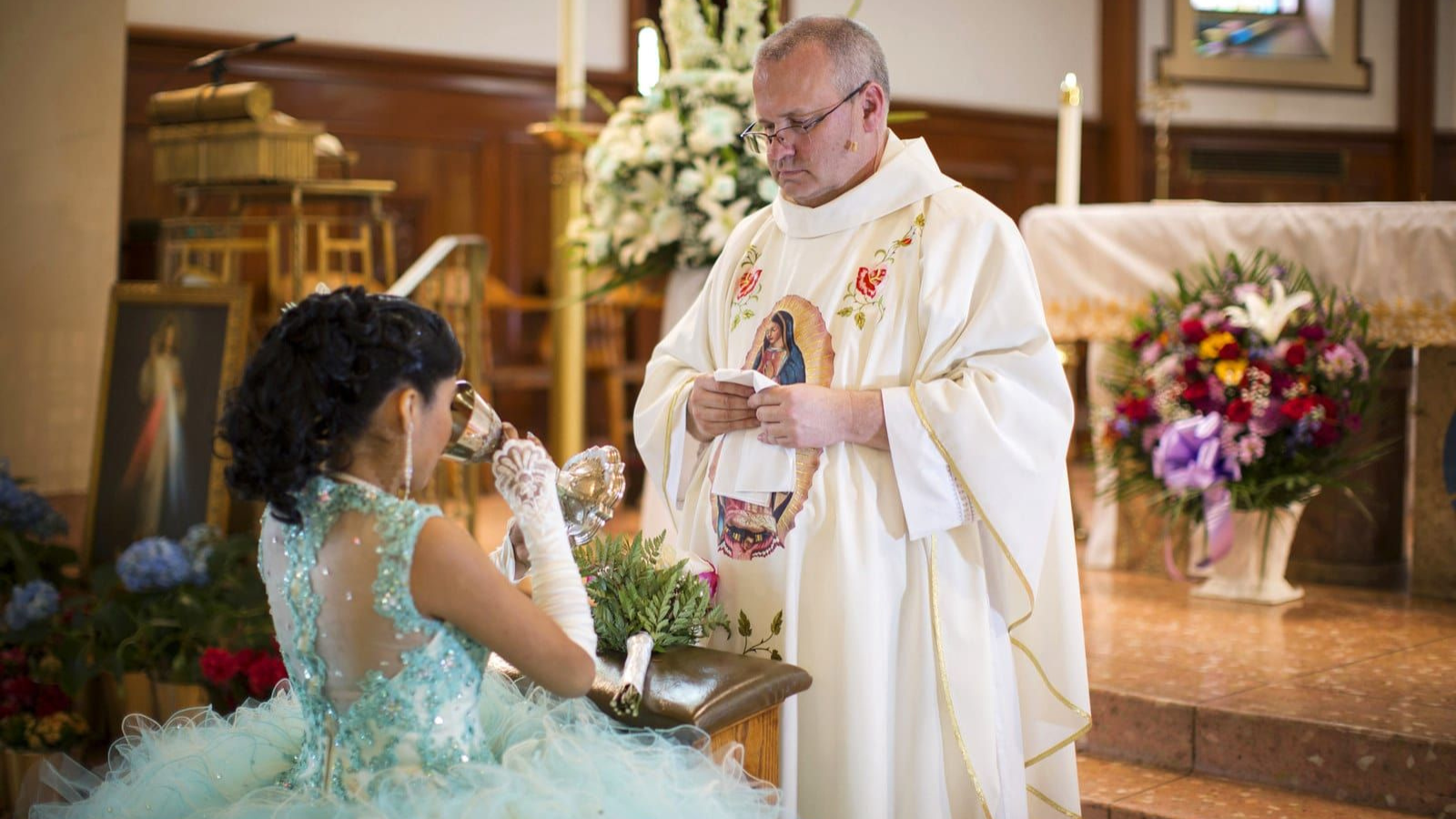
A Quinceañera is a beautiful celebration of faith, family, and thanksgiving as a young woman marks her fifteenth birthday and gives thanks to God for the gift of life. At Our Lady of the Lake, families are invited to make this special milestone a Christ-centered celebration through prayer and participation in the life of the Church.
Families interested in celebrating a Quinceañera at Our Lady of the Lake are encouraged to contact the parish office for information about preparation, requirements, available dates, and scheduling.
Catholics believe that the Bible is God’s self-revelation, inspired and inerrantly written. The Bible is not like any other book. Because the Scriptures were written under the positive influence of the Holy Spirit, they are considered to be sacred literature.
We believe that God is revealed through the Patriarchs and Prophets in the Old Testament and through Jesus Christ in the New Testament. God’s revelation is also entrusted to the Apostles and their successors so that the Word of God is revealed in both Scripture and Tradition. Catholics believe that the Bible is a living document—it continually speaks to believers in every age.
Saints
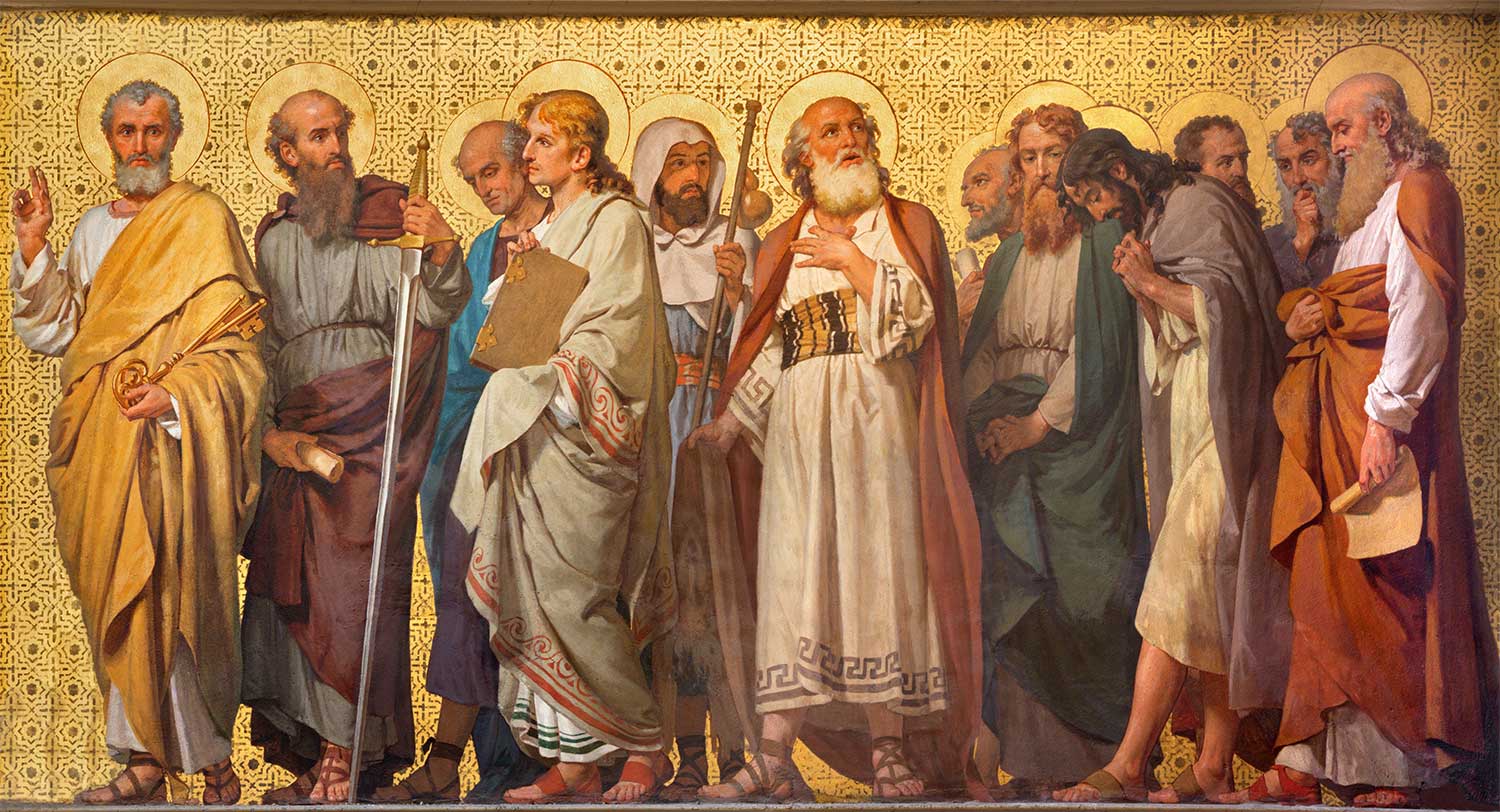
All believers, living and dead are a part of the Communion of Saints. The Catechism says, "We believe in the communion of all the faithful of Christ, those who are pilgrims on earth, the dead who are being purified, and the blessed in heaven, all together forming one Church; and we believe that in this communion, the merciful love of God and his saints is always [attentive] to our prayers" (CCC 962).
The saints are exemplars of how to follow Christ; they teach us how to live faithful and holy lives. The saints are our advocates and intercessors, and they are also friends and mentors.
The Saints in Scripture
In scripture, Paul addresses many of his letters to the various local communities under the title of “saints:” Romans, 1 and 2 Corinthians, Ephesians, etc. The term “saints” was also applied to those whom Christians served. In 1 Corinthians we read that Paul made a collection in Corinth for the relief of the saints in Jerusalem.
Paul also talks about the Communion of Saints in that each of us participates by baptism in the one Body of Christ. In his letter to the Romans, Paul tells us “For as in one body we have many parts, and all the parts do not have the same function, so we, though many, are one body in Christ and individually parts of one another. Since we have gifts that differ according to the grace given to us” (Romans 12:4-6).
Paul is very clear that members of this common body had obligations to build up the community – these members were called “saints.” This is connected with the Jewish idea of being a holy nation, a covenanted people. The “saints” are those who have inherited the covenant.
Martyrs
As Christianity developed, the word saint came to be used more commonly to designate specific individuals who were held to be exemplars of the faith, and who were commemorated or venerated as inspirations to other Christians.
In the beginning of our Church’s history, many witnessed to their faith by giving their lives. Many of the followers of Christ were martyred rather horrendously. Some early saints were stoned, as was Stephen. In the Acts of the Apostles we read: “They threw him out of the city, and began to stone him….As they were stoning Stephen, he called out, ‘Lord Jesus, receive my spirit.’ Then he feel to his knees and cried out in a loud voice, ‘Lord, do not hold this sin against them;’ and when he said this, he fell asleep” (Acts 7:58-60).
Tradition has it that Peter chose to be crucified upside down and that St. Paul was beheaded. Ignatius of Antioch, was "ground like wheat" by the teeth of animals. Perpetua and Felicity, two young women, had to wait until after Felicity's baby was born before they could face the lions. During this time Perpetua wrote down her thoughts, giving us a firsthand account of martyrdom.
Tertullian rightly said that the blood of the martyrs was the seed of the Church.
Canonization
Since the 10th century, the Church has officially applied the standard of holiness of life to certain individuals who lived exemplary Christian lives and through a lengthy process of prayer and study have declared that the individual is in heaven. Contrary to the belief of some, the Church does not "create" saints, but simply applies the standard of gospel holiness to those God permits the Church to know are in heaven. Canonization is a process that includes the calling forth of witnesses, verification of miracles and other holy actions and much research and scrutiny.
There are many books on the saints. For more information and resources on the saints, visit www.osv.com.